
Episodes
Excerpt from the Memoir

These past decades, but in particular these past weeks, we have all been pummeled by images—of violence, grief, systemic collapse—without the means to process them, let alone respond.
We're asked to metabolize horrors in real time and to remain functional while watching worlds unravel.
For this Sunday’s piece, I wanted to consider the word episode—the private ones, the ones we live through in our bodies when the public world becomes too much.
What do they mean, and how do we survive them? What might they reveal when we’re no longer ashamed of naming them and the emotions they trigger? When we share them with the world.
So, for that, I decided to dig into an excerpt in progress from the memoir.
To reflect on the rupture and reckoning of living through personal psychiatric episodes and how similar they are to what we are currently experiencing while the world burns around us.
TL;DR
We are all aching parts of a slowly decomposing body. And while we attempt to stay attached to this body, we are told that if we focus less on the unraveling, we’ll feel better. That we must, as much as possible, “protect” our peace.
I call bullshit.
What I encourage us to do is just the opposite: keep looking.
Never, ever stop looking. You might even find yourself somewhere in the rubble.
The mornings after an “episode” are always rough. My eyes are struggling to stay open. I force them to flutter, hoping to shoo away the dream-like feeling of floating rather than standing firmly on the ground.
Did you know that the word episode comes from the Greek epeisodion? It refers to an interlude, a self-contained section within a larger narrative, particularly in Greek tragedy. “An episode is a discrete even within a larger structure,” Latin tells us. English swooped the word away and added to its definition the meanings of “incident,” or “event within a broader story.” A detail, overexposed, that saturates perception, making it—making me—unable to engage with the world in a meaningful way.
With time, I learned not to pay too much attention to the lingering pain that sticks sideways across my head. There was a time when I would sit and write and write for hours about every little feeling, every single thought that’d crossed my mind and body, re-puncturing them with the wounded details that had made the moment so unpredictable, disturbing.
I feared I’d run aground if I didn’t at least attempt to anchor myself to the meaning of my suffering. There was something intentional, almost intimate, in rehashing the episode, as if a second emotional induction could erase the volatility of the first, bypass its primal terror, unveil some hidden meaning I’d missed the first time around.
But interpretation is a sneaky bitch. If you don’t pay attention, she soon takes over your life while you remain incarcerated within the walls of your own skull.
Meaning is what every single one of us craves. That and to be loved, of course—which is the same thing. To know that our suffering matters. That it’s not for naught.
Finding meaning, after all, is also one of the steps of grief: after the shock, refusal, anger, negotiation, despair and acceptance comes the need for meaning.
In the 19th century, episode entered the medical discourse as a clinical description of conditions like epilepsy and fevers, when patients had an episode of symptoms—transient yet intense.
It soon spread like wildfire, going beyond the symptoms' objective and measurable physicality. People (cough, cough—women) began having “hysteric episodes.” Others were deemed “maniacal” or “melancholic.”
With the emergence of modern psychiatry—with men like Freud or Bleuler—episode became more systematically used to describe acute phases of mental illness. Emil Kraepelin, the father of the DSM and one of the key figures in classifying mood and psychotic disorders, described “episodic courses of mental illness”, distinguishing conditions with distinct episode like bipolar disorder from progressive ones (like schizophrenia). He facilitated the field’s transition from speculative, psychoanalytic psychiatry to an empirically driven, medicalized framework.
Everything hurts right now.
I look for relief anywhere—everywhere.
Gosh, that’s embarrassing.
Begging to belong. Yearning to be worthy. There’s no way friends and family don’t find me absolutely appalling when I get into these shaky states; no way they don’t smell blood and want to flee. The neediness. The neediness!
After WWI and WWII, episodes came to describe acute psychological events: panic attacks, dissociative episodes, flashbacks and psychotic breaks. Terms like “shellshock,” “battle fatigue,” and, later, “PTSD,” were incorporated into the classifications alongside “depressive,” “psychotic,” and “manic” episodes into diagnostic criteria.
In today’s world, episode retains the double meaning of a limited, intense manifestation of mental illness. It also carries an informal and stigmatizing connotation—“I had an episode.”
Funny, I think now, how we are told that “in the grand scheme of things,” these dark episodes shouldn’t matter as much as the bright ones, as if they are mere flukes, ruptures and moments of too great intensity to propel us steadily, with measure, in the continuity of our daily experience.
But shit. Time is as linear as the codes in the DSM are accurate in describing the scope of an illness.
“Don’t read too much into the flashbacks,” I’ve been told after a particularly difficult flood of images. “They don’t define you. They don’t mean anything more.”
Don’t they? Would I need to simply set them aside, another stain—which shares its root with stigma (to stick, prick or mark)—in the grand scheme of things of my life?
“Don’t look!” What you pay attention to expands.
Why on earth would I do that?
I understand what they mean: by focusing on madness, on the horrors, and my intimacy with the unspeakable, I will never free myself from its silencing burden.
But what’s the alternative when horrors surround you from all sides?
After all, these episodes are not mere footnotes. I have built my entire existence around them, ensuring they won’t hijack the other parts—good enough mother, spouse, writer. Sure, they send me away, cut from shared reality, and carry the risk of overinterpretation and missing the point, but they are not mere ornaments; they provide a shift in scale and perspective in a perceptive back-and-forth, dynamic and functional, midway between the necessity of speaking up and the desire to say nothing.
I pat the pocket of my robe and find my bottle of meds.
Drugs. What would I do without them? I started taking sertraline during my UNC stay. Eight years later, here we are still. Dosage has significantly lowered, though—a feast for the overachiever: I can’t do it with a broken mind, but maybe I can, one day, do it without pills.
That’s the dream, innit? To be clean? A eugenic of the soul: purged and holy, ready for a new life?
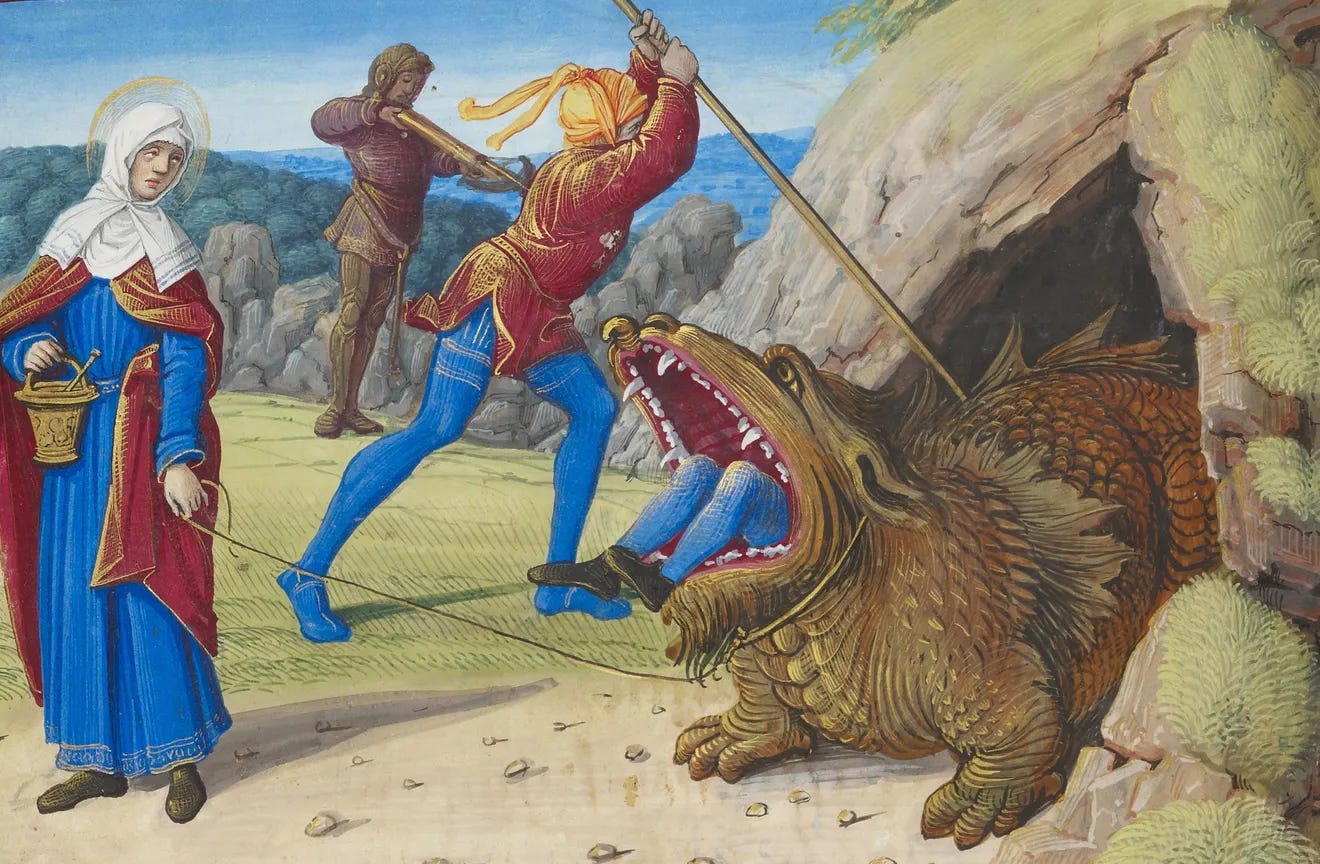
What’s beneath all that anger?
I once found great comfort in the recurring of my pain—her repetition, tidal and steady. Being mercurial defined me: if I couldn’t be normal, then I’d be crazy.
All my life had been defined by my tendencies to overreact to the mundane—from forgetting my birth certificate at the passport office, sending me into a blazing panic attack to slapping the bulletproof glass with both fists at the bank—and underreact to major events, like having a chronic illness that drained the blood off my brain causing me to faint.
I overshared, aroused myself, consumed by my ailments, which provides a framework to live, to feel the world. Dysregulated from bottom to top, my world turned upside down; from childhood to womanhood, I could always fall back on corky Mercure.
I became accustomed to the highs and lows my conditions provided, dependent upon their intensity, euphoria, and infectious ability to induce high moods and enthusiasm in others.
People capitalized on my manias and productivities, while, like a gambler, I sacrificed everything for the fleeting but ecstatic moments of winning, for these brief interludes of high energy and mood[ii]. Decades went by, and I rejected the idea that I could be anything but her, forever outside myself and disconnected from the world, all the while oh so productive and wishing she’d win me a Pulitzer, leave me in peace, or, at last, grant me the space to die.
The true discomfort only arose when I had to step into my skin, naked and afraid, unable to rest even in my own house.
A friend once told me about the difference between “curing” and “healing.”
“This made me think of you,” she wrote, then attached a screenshot with words on a purple and fluorescent-green background:
Cure vs. Healing:
To cure implies the eradication of symptoms, a return to a previous state where illness no longer exists. Healing, on the other hand, is the process by which recovery is possible even in the presence of symptoms, scars, or lasting wounds.
“Recovery” itself is a loaded term—one that suggests not just a return to health, but a reclamation:
From Property → “Act or power of regaining or reaching.”
From Consciousness → "To regain consciousness."
What, then, is truly being recovered? And for whom?
Returning to health is always more elusive than we first believe. It takes willpower to come home—to reclaim something that was once ours but now arrives changed.
To recover is also to take responsibility without the promise of closure and feel-good presence.
But more than complexity, I want clarity.
More than peace, I want to be able to tolerate coming face-to-face with monsters.